




Electoral Reforms a Vital Condition
- Details
- Written by: Charles Kanyimo
- Hits: 1483
 Electoral Reforms: Zimbabwe Opposition’s Urgent Priority
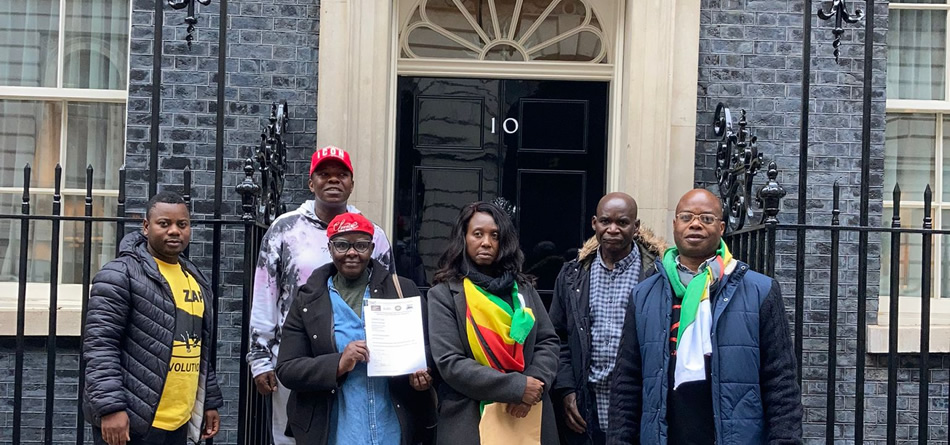
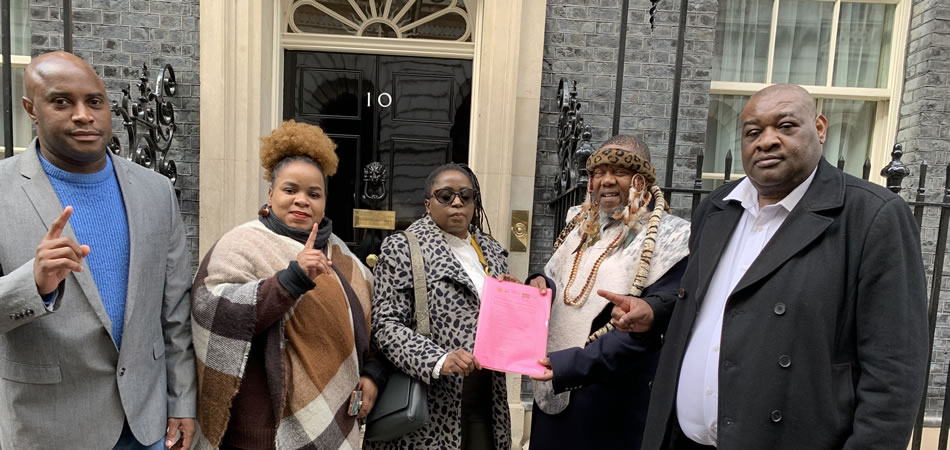
Linked HERE to Physical Petition as handed into 10 Downing Street and e-mailed to FCDO
With the ruling ZANU PF party embroiled in internal factional battles, the political scene in Zimbabwe is approaching interesting times. Unfortunately, the opposition is focused on the fallout within ZANU PF while the most urgent issue—electoral reform—is being sidelined. Without fundamental changes to the electoral system, the next election is likely to be another manipulated process that keeps ZANU PF in power against the will of the people, whether it’s Mnangagwa or Chiwenga at the helm.
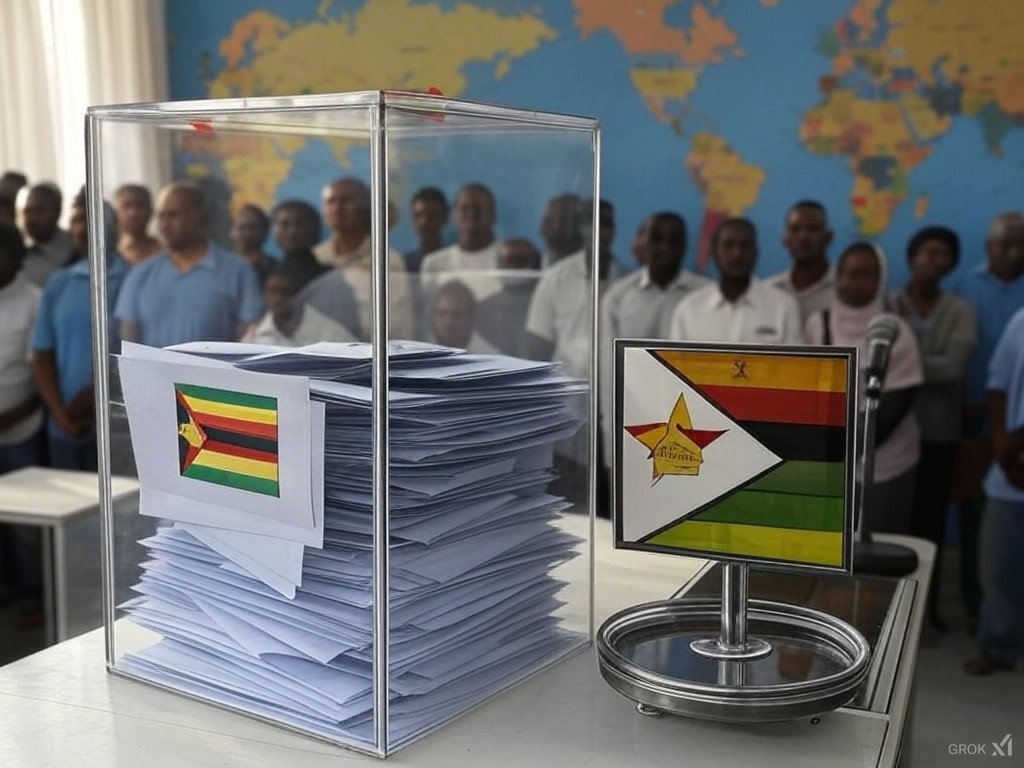
The 2023 elections once again exposed how the Zimbabwe Electoral Commission (ZEC) operate as an extension of ZANU PF rather than an independent election body. The opposition lost largely because of a compromised voters’ roll, which was never properly audited, making it easy for ghost voters and irregular registrations to benefit the ruling party. Gerrymandering also played a role, with constituency boundaries altered to favor ZANU PF.
State-sponsored voter intimidation was another major factor. The presence of FAZ (Forever Associates Zimbabwe), a ZANU PF-linked group that effectively acted as an extension of the intelligence services, created a climate of fear at polling stations. Many rural voters were subjected to assisted voting, where they were pressured into casting ballots for the ruling party. Reports of ballot stuffing and vote tampering were ignored by ZEC, which refused to act on any complaints raised by the opposition.
Despite overwhelming evidence of a rigged process, ZEC declared the elections free and fair, reinforcing the reality that it is not a neutral institution. The opposition must stop treating ZEC as a legitimate electoral body and instead demand its complete disbandment. There is no point in participating in elections run by an institution that is designed to keep ZANU PF in power.
For decades, ZANU PF has blocked meaningful electoral reforms because they know that a free and fair election would likely result in their removal from power. They have refused to allow independent audits of the voters’ roll, manipulated electoral laws to ensure ZEC remains under government control, and used state institutions like the police and judiciary to suppress opposition campaigns and protests. ZANU PF party has also relied on intimidation and violence to discourage voter participation, particularly in rural areas where they enforce their control through traditional leaders.
Their resistance to reform is an admission that they cannot win a democratic election without rigging. This is why the opposition must stop getting distracted by ZANU PF’s internal conflicts and instead focus on mobilizing for electoral reforms. The real fight is not about who takes over within ZANU PF—it is about ensuring that the electoral system no longer allows them to manipulate elections.
ZANU PF has been pushing for Zimbabwe’s re-admission into the Commonwealth, hoping to regain unlikely international legitimacy. However, the Commonwealth must not grant Zimbabwe this privilege without concrete electoral reforms. Re-admitting Zimbabwe without fixing its deeply flawed electoral system would be a betrayal of democratic values.
From Colonisation to Dictatorship
- Details
- Written by: Charles Kanyimo
- Hits: 1822
 ZIMBABWE finds itself at yet another critical crossroads. See Article on Newsday {Click Here} Check Out Charles Kanyimo on Twitter/X
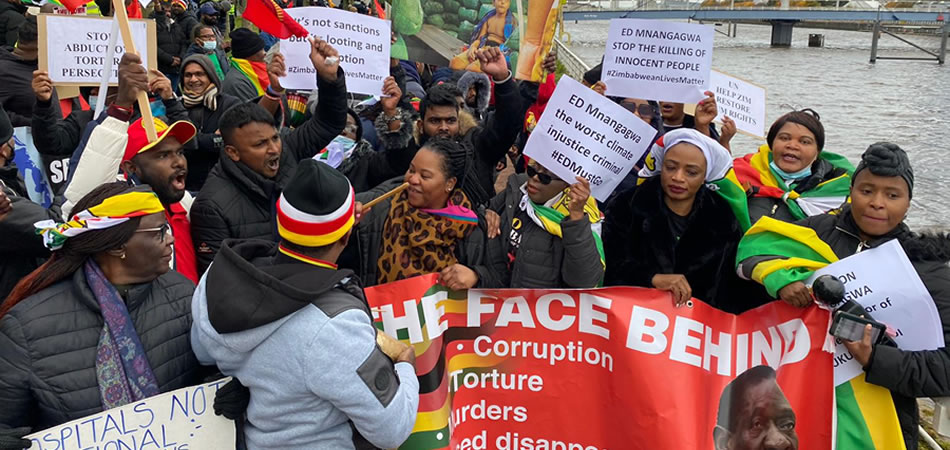
President Emmerson Mnangagwa is manoeuvring to extend his presidency beyond the constitutional limit, aiming to remain in power until 2030. With a big portion of his own party against it, this move echoes the failed attempt by Grace Mugabe to seize control prior to the 2017 military intervention. Just as Grace’s ambitions caused political instability, Mnangagwa’s efforts risk further destabilising both ZANU-PF and the country, reigniting fears of authoritarian rule. {see additional Articles - CLICK HERE}
Under Mnangagwa’s leadership, the government is attempting to override the country’s constitution, which was carefully crafted to ensure peaceful political transitions. This bold, audacious push is a direct attack on democracy and the rule of law, further entrenching corruption and misrule. For a nation already grappling with economic collapse, hyperinflation, and widespread poverty, this move is a betrayal of the hopes Zimbabweans had for a brighter future. {in addition ZAPU President M S Nkomo has made his Party's Position clear in their article and a Press Conference CLICK HERE to read}
Prominent journalist and activist Hopewell Chin’ono has been one of the loudest voices condemning this unconstitutional effort. He has called the plan “a clear assault on the democratic aspirations of Zimbabweans,” describing Mnangagwa’s government as;
“a personal fiefdom, ruled by a corrupt mafia.”
These charges are not unfounded. Under Mnangagwa’s rule, Zimbabwe’s government has become synonymous with looting, nepotism, and harsh repression. The president and his inner circle—his family included—have enriched themselves by plundering the nation’s resources, while ordinary Zimbabweans struggle daily. The push to amend the constitution is not about governance or national stability, but rather about consolidating power and continuing the systematic looting of the country’s wealth.
When Mnangagwa took power in 2017 after the coup that ousted Robert Mugabe, many Zimbabweans were hopeful. They believed a new era of reform, economic revival, and democracy had arrived. But nearly eight years into his presidency, it is clear that Mnangagwa’s government is no different—if not worse—than the one it replaced.
The 2013 constitution, which was adopted following a national referendum, represents one of Zimbabwe’s most significant democratic milestones. It limits the presidency to two five-year terms, ensuring a peaceful transfer of power. Yet, Mnangagwa’s bid to extend his rule until 2030 would turn the constitution into an instrument of oppression, instead of a safeguard of democracy.
Justice for a Genocide
- Details
- Written by: M S Nkomo, Chief F Ndiweni and J C Burke
- Hits: 2001
 Thursday, Genocide Petition to the Prime Minister!
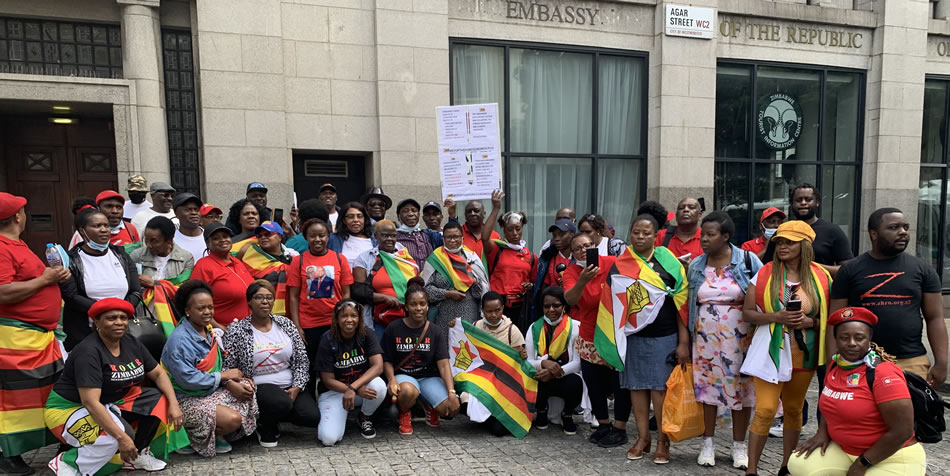
On 5th December 2024 we congregated outside the newly "secured" Zimbabwe Embassy - they have got some grim looking metal security gated fabrications at the side and front entrances - to make the Embassy even less friendly or appealing to the Zimbabwean Diaspora - security concerns or Guilt? - we have to ask why these new gates - {photo on Flickr - click to see for yourself SIDE DOOR - 429 CORNER DOOR }.
True to form the guilty inside locked their doors - simply as we were there. Indeed they sent out a CIO to sit in his new BMW X6 to "observe us" - so we took their photos too - again on our Flickr Album of the day. {CLICK HERE TO SEE THE DAYS PHOTO ALBUM} Please note that due to technical constraints, the videos recorded today will take some considerable time to be 'compressed' in order to be displayed upon our Flickr Platform - so expect videos to be appearing by the weekend please.
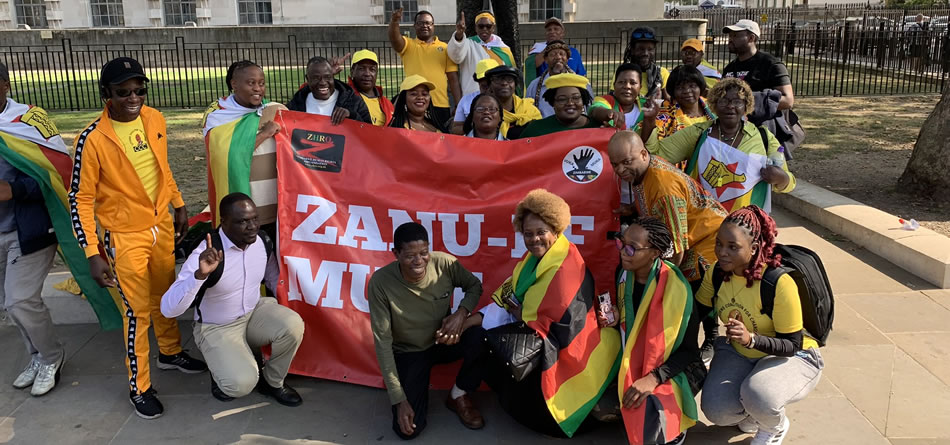
We took some more photos with our "Zanu PF Must Go" banner and by 13:30 we sidled off towards Trafalgar Square and onto Whitehall. by 13:45 we were arranged opposite Downing Street - under the gaze of "Monty" at his commemorative statue. By the time we have said our hellos to the new supporters opposite Downing Street it was time to present our band of 6 petitioners to the Diplomatic Police Unit in control of Downing Street. Ronald T Mutumbi, was due to be the Organiser of the 6 of us today - but had unexpected problems with travel on the day - such a pity.
So we 6 lined up at the solid security gates {making the Zimbabwean Embassy gates looking a little flimsy!} at the entrance to Downing Street. Our Police Diplomatic Unit Escort - was a friendly as any tourist guide - calling us in by our first names! As some may know within those gates we have to go through Air Port Quality X-Ray machines to check all our bags, mobile phones or any metal objects.
Liberation was Hijacked
- Details
- Written by: TENDAI RUBEN MBOFANA
- Hits: 2717
 The greatest tragedy to Zimbabwe was the hijacking of its liberation struggle
Yesterday, I received a heart-wrenching message from a former combatant of Zimbabwe’s liberation struggle, now residing in South Africa. His words, laced with pain and disillusionment, will forever resonate with me. In his message, he recounted the harrowing experiences he and his fellow freedom fighters endured during the war, a period marked by immense trauma and sacrifice. Yet, despite the bloodshed, the suffering, and the unyielding hope for a better future, the independence that came in 1980 did not deliver the freedom or the prosperity he and so many others had envisioned.
Instead, it brought an economic and political system that seemed to intensify their hardships. For millions of Zimbabweans, including this former combatant, the post-independence era only marked a deepening of poverty and despair, culminating in his decision to leave the country in search of a better life abroad. In his final words, he asked a question that brought tears to my eyes: “Why did we go to war, and why did thousands lose their lives?”
His message struck at the heart of Zimbabwe’s greatest tragedy—one that has yet to be adequately addressed in our national discourse. Another painful reminder of this betrayal comes from the account of a different war veteran whose life I am currently documenting in a book. His story, which spans from his early years before the war, through his experiences during the liberation struggle, and into the harsh realities of post-independence Zimbabwe, paints the same tragic picture. Like many others, he joined the fight with hopes of a new, just society—one where the fruits of independence would be shared by all.
Yet, upon returning to Zimbabwe after the war, he found himself trapped in a system that prioritized the enrichment of a small political elite while the vast majority, including veterans like himself, were left to struggle. His dreams, like those of so many others, were crushed by the very government he helped to bring to power, leaving him with a deep sense of betrayal. He, too, ended up leaving the country he fought for in search of a better life.
The liberation struggle was hijacked by those who were supposed to lead the country towards a more just and equitable society.
Instead of empowering the masses, the independence movement was usurped by a small, self-interested elite whose primary goal was not freedom for all, but power and control over the nation’s wealth. This elite, driven by personal ambition rather than a genuine desire for social transformation, has systematically enriched themselves at the expense of the very people who fought to secure the country’s freedom. The liberation struggle, which should have been about the collective liberation of all Zimbabweans, has instead become a bitter reminder of the betrayal of the ideals it was meant to represent.
- Ghost of Zimbabwean Gold
- Member Perspectives 13th Dec 2023
- Amnesty International Zimbabwe Review 2018-2023
- Police and ZEC Bias in Zimbabwe - ZHRC
- Job Sikhala's Resilience
- Tendai Biti - STATEMENT
- Your Right to Vote Zimbabwe
- Something Rotten in the State (of Zimbabwe)
- Gold Mafia - More Fallout
- Zimbabwe has no President
Page 6 of 52


