




Petition to 10 Downing Street
- Details
- Written by: ZHRO and Others
- Hits: 1685
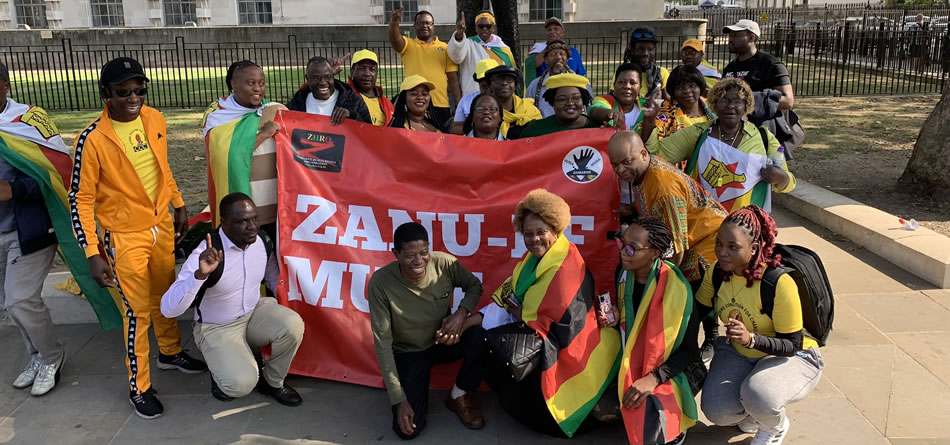
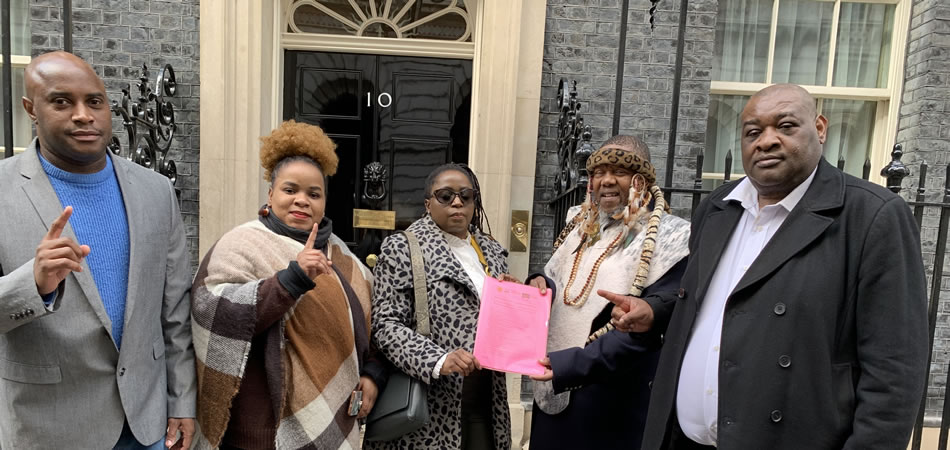
 Whitehall, London SW1A | Friday 15 May 2026, 14:00 GMT
Zimbabwe Human Rights Organisation (ZHRO) & Zimbabwean Independent Diaspora Coalition [ZAPU Diaspora | CCC Diaspora | ROHR | Women of Zimbabwe Arise (WoZ) | Chief Felix Ndiweni]
ZHRO et al formally submits petition and intelligence report on Zimbabwe's constitutional crisis to the UK Government and Commonwealth Secretariat
Constitutional Amendment Bill No. 3 declared illegal by independent legal experts and now subject to active challenge before Zimbabwe's own Constitutional Court — as ZANU PF continues documented transnational repression against diaspora activists on British soil.
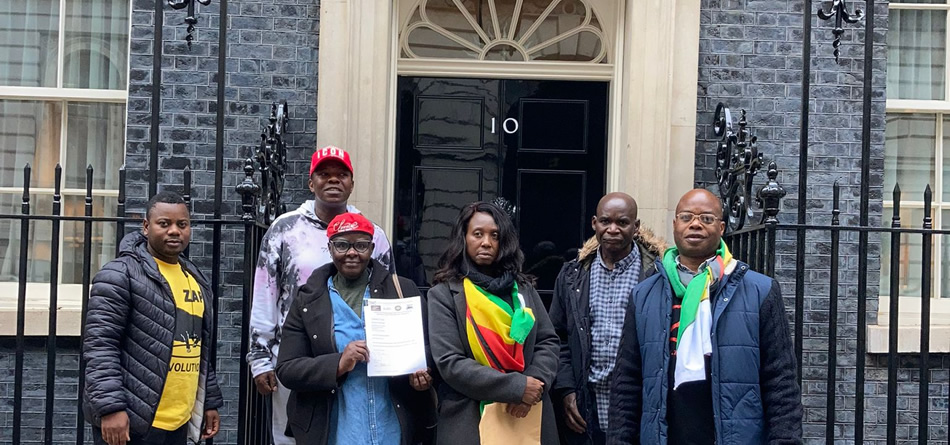
Formal submissions delivered to
|
Office of the Prime Minister 10 Downing Street, London |
FCDO — Lord Collins Foreign, Commonwealth & Development Office |
|
Joint Committee on Human Rights House of Commons, Westminster |
Commonwealth Secretariat Attn: Secretary-General Shirley Botchwey |
|
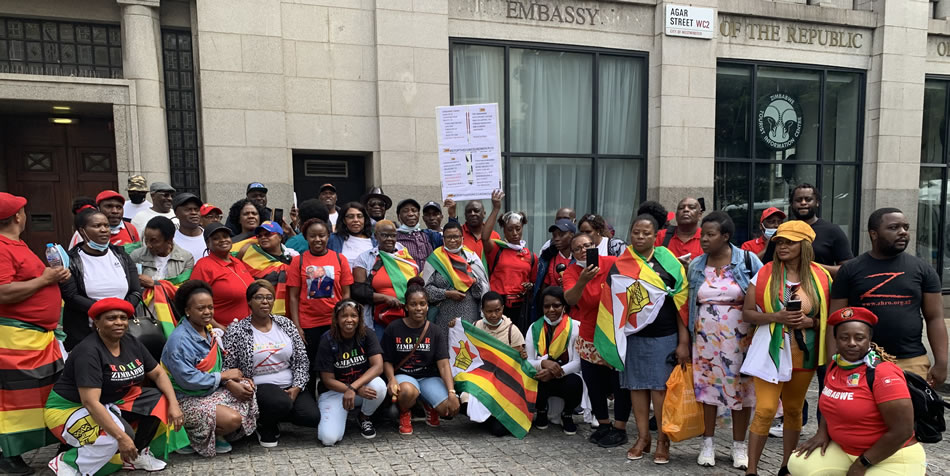
South African High Commission Attn: The High Commissioner — 15 Whitehall, London SW1A |
Re: CAB3 regional security implications & SADC Chair responsibilities |
The Zimbabwe Human Rights Organisation (ZHRO) and the Zimbabwean Independent Diaspora Coalition today formally submitted two documents — a petition to the Prime Minister of the United Kingdom and a detailed intelligence brief arising from a Twitter Spaces discussion on 15 May 2026 — to five institutions: the Office of the Prime Minister, the Foreign Commonwealth and Development Office (FCDO), the Joint Committee on Human Rights (JCHR), the Commonwealth Secretariat, and the South African High Commission in London.
The submissions set out, in formal and evidenced terms, ZHRO's position that Constitutional Amendment Bill No. 3 (CAB3) — currently being driven through Zimbabwe's Parliament by the ZANU PF regime — is constitutionally illegal, that its passage is being pursued through intimidation and manufactured consent, and that the same apparatus of repression is being deployed by ZANU PF against members of the Zimbabwean diaspora on British soil.
|
“CAB3, as currently constituted, cannot lawfully proceed without a referendum. The regime has chosen to manufacture a parliamentary debate and call it consultation. The Constitution does not permit this. The process is void.” — Constitutional lawyer Doug Coltart, May 2026 |
Why CAB3 is constitutionally illegal
Section 328 of Zimbabwe’s 2013 Constitution — adopted through popular referendum and representing the most legitimate constitutional document in Zimbabwe’s history — requires a national referendum before presidential term limits can be extended or the method of presidential election altered. CAB3 proposes both: extending presidential and parliamentary terms from five to seven years, replacing the direct popular election of the President with election by a joint sitting of Parliament requiring only 30% of the vote, and retrospectively extending President Mnangagwa’s current term. No referendum has been held. No credible independent legal opinion supports the regime’s claim that parliamentary approval alone is sufficient. CAB3 is void.
On 13 May 2026, a formal constitutional challenge to CAB3 was filed before Zimbabwe’s own Constitutional Court — brought by war veterans as representatives of the people of Zimbabwe, against President Mnangagwa and the Attorney General, represented by Professor Lovemore Masuku. The Court accepted the case, convened a case management meeting, and granted applications from independent media to live-stream proceedings. State broadcasters were excluded from the live-stream authorisation. The constitutional illegality of CAB3 is no longer diaspora advocacy alone: it is now before Zimbabwe’s own judiciary.
Transnational repression on British soil
ZHRO has documented a sustained pattern of surveillance, naming and intimidation of Zimbabwean diaspora activists on British soil, directed by ZANU PF UK & Europe — the formally constituted British division of Zimbabwe’s ruling party. A leaked memo published on 11 May 2026 named more than 50 UK-based activists as targets for prosecution under Zimbabwe’s Patriotic Act 2023. This follows articles published in November 2021 and March 2026 naming ZHRO members who attended lawful public demonstrations in Glasgow and Blackburn. The Varakashi digital militia continues to operate across WhatsApp, X/Twitter and Facebook targeting UK-resident diaspora members. ZHRO’s formal reports to the FCDO and to the Home Secretary have received inadequate responses. That inadequacy is itself documented in these submissions.
A note to the South African High Commission
President Ramaphosa’s visit to President Mnangagwa’s Precabe Farm in Kwekwe on 4 May 2026 — conducted privately and without prior public announcement, in the company of individuals under active South African financial investigation — drew immediate and formal challenge within South Africa’s own Parliament. The Democratic Alliance submitted parliamentary questions on the use of state funds and condemned the association with figures linked to alleged money laundering. Respected Zimbabwean media executive Trevor Ncube, in an open letter of 10 May 2026, called directly on President Ramaphosa, as SADC Chair, to engage not only with the Mnangagwa administration but with Zimbabwe’s civil society, opposition, and constitutional defenders. ZHRO submits these documents to the High Commission in that spirit.
The regional security implications of CAB3 are of direct and specific relevance to South Africa. The provision reducing the parliamentary threshold for electing Zimbabwe’s President to 30% of a joint sitting — read alongside Zimbabwe’s citizenship acquisition laws — creates a mechanism by which a foreign power could effectively purchase control of Zimbabwe’s executive. Zimbabwe borders South Africa and sits atop some of the world’s largest reserves of lithium, platinum, diamonds and chrome. This is not a matter of internal Zimbabwean politics. It is a matter of regional security that South Africa, as SADC Chair, has both the standing and the responsibility to address before the parliamentary vote proceeds.
A note to the Commonwealth Secretariat
Zimbabwe was suspended from the Commonwealth in 2002 and withdrew in 2003 following documented democratic backsliding. ZHRO formally submits to Secretary-General Shirley Botchwey and the Commonwealth Secretariat that the conduct documented in these materials — constitutional manipulation without referendum, capture of the Zimbabwe Electoral Commission, abduction of student leaders, and transnational repression of diaspora activists on the soil of a fellow Commonwealth member — is directly inconsistent with the values of the 1991 Harare Declaration. These submissions are placed formally on the record as evidence relevant to any future consideration of Zimbabwe’s Commonwealth re-engagement or re-admission.
|
Documents submitted 1. ZHRO Petition to the Prime Minister and FCDO [CLICK HERE to READ] Delivered 15 May 2026, 14:00 GMT — Parliament Street, London SW1A 2. ZHRO Intelligence Brief and Petition Addendum [CLICK HERE to READ] Twitter Spaces — 13 May 2026 — with constitutional lawyer Doug Coltart, MP Daniel Molokele (Hwange Central) and MP Gladys Hlatywayo |
Press and media enquiries - See Press Release Section
Co-signed by: ZAPU Diaspora | CCC Diaspora | ROHR | Women of Zimbabwe Arise (WoZ) | Chief Felix Ndiweni
Referendum Matters More Than CAB3
- Details
- Written by: Elizabeth Chitengo
- Hits: 812
 Zimbabwe’s Constitutional Moment:
Why the Referendum Matters More Than CAB3 Itself
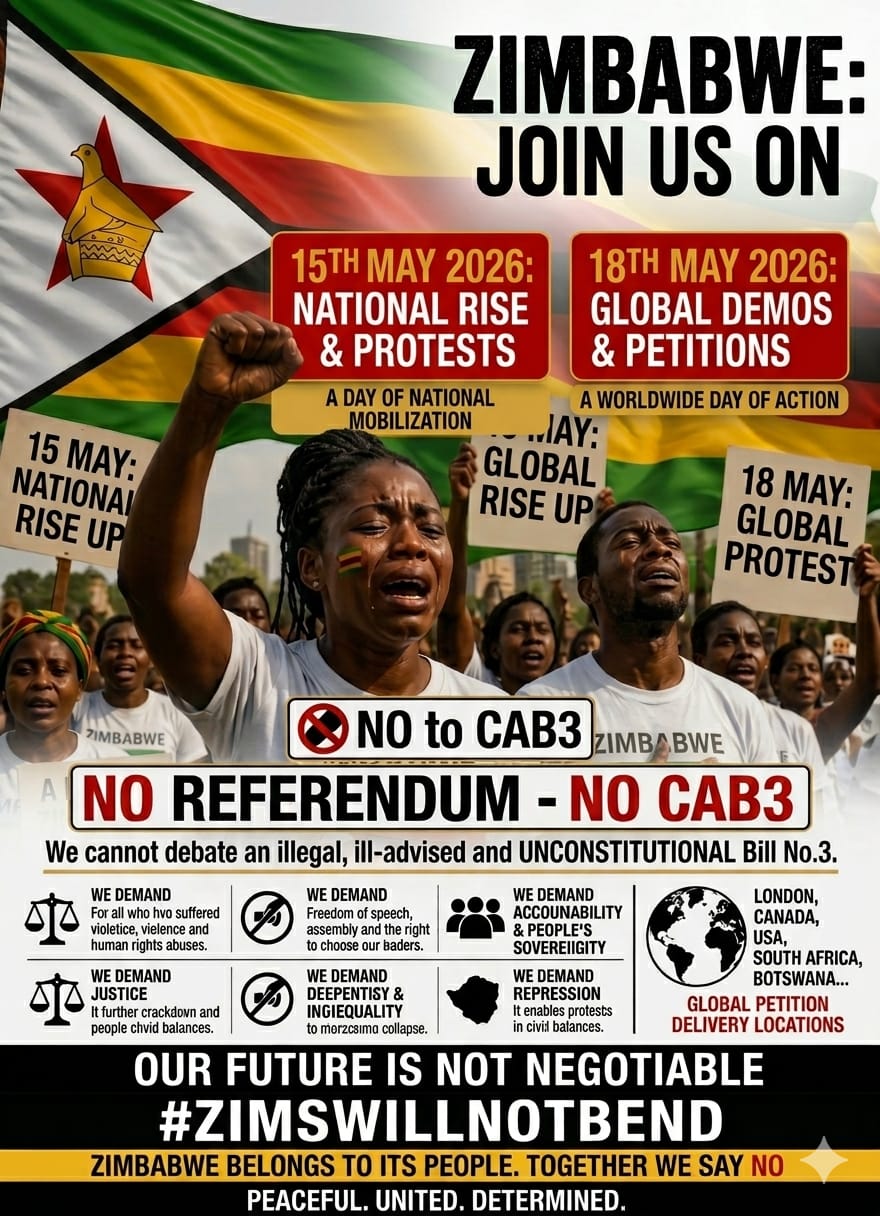
In recent weeks, public debate around Constitutional Amendment Bill No. 3 (CAB3) has intensified, drawing passionate responses from citizens both at home and across the diaspora. Protests, petitions, and calls for national mobilization reflect a growing sense that Zimbabwe stands at a defining crossroads. Yet amid all the noise, there is a critical point that must remain at the center of this conversation:
the constitutional requirement for a referendum.
This is not a technicality. It is the foundation of constitutional democracy.
The 2013 Constitution was born out of broad public consultation and national consensus. It represents the will of the people, not the preferences of those temporarily in power. Any attempt to alter that foundational document—especially in ways that may affect governance, rights, or democratic structures—demands direct public participation through a referendum. This is not optional. It is a constitutional obligation.
Efforts to redirect the conversation toward the content of CAB3—whether its provisions are beneficial or harmful—miss the point entirely. That shift is a distraction. It invites endless debate, division, and confusion, while quietly bypassing the core legal requirement that gives legitimacy to any constitutional change. Without a referendum, the process itself becomes unlawful, regardless of the arguments for or against the bill’s contents.
This is why the message from civic groups and activists has been consistent: No referendum, no legitimacy. No CAB3 without the people’s direct consent.
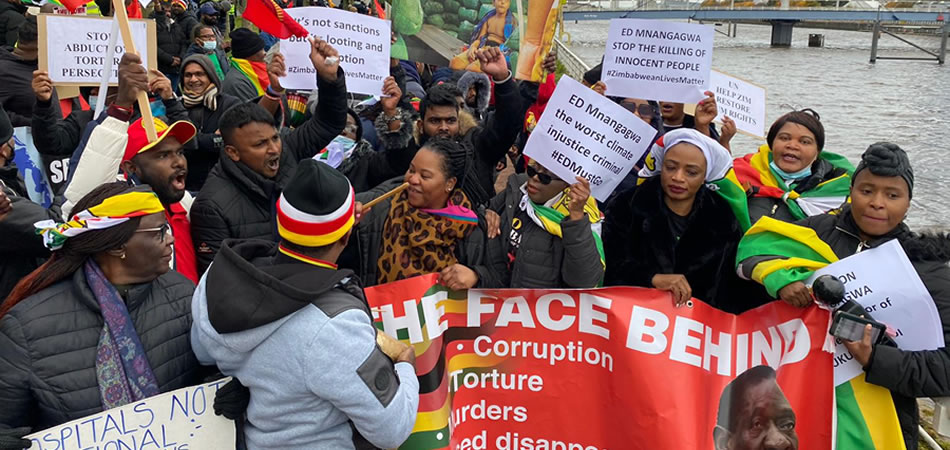
The demands expressed in public demonstrations and advocacy campaigns reflect deeper concerns about governance and accountability. Citizens are calling for justice for victims of violence, protection of fundamental freedoms such as speech and assembly, and an end to repression. They are demanding transparency, equality, and respect for the rule of law. These are not abstract ideals—they are the pillars of a functioning democracy.
But none of these demands can be secured if the constitutional process itself is undermined.
ZHRO Strongly Condemns CAB3
- Details
- Written by: ZHRO and Petitioners
- Hits: 1663
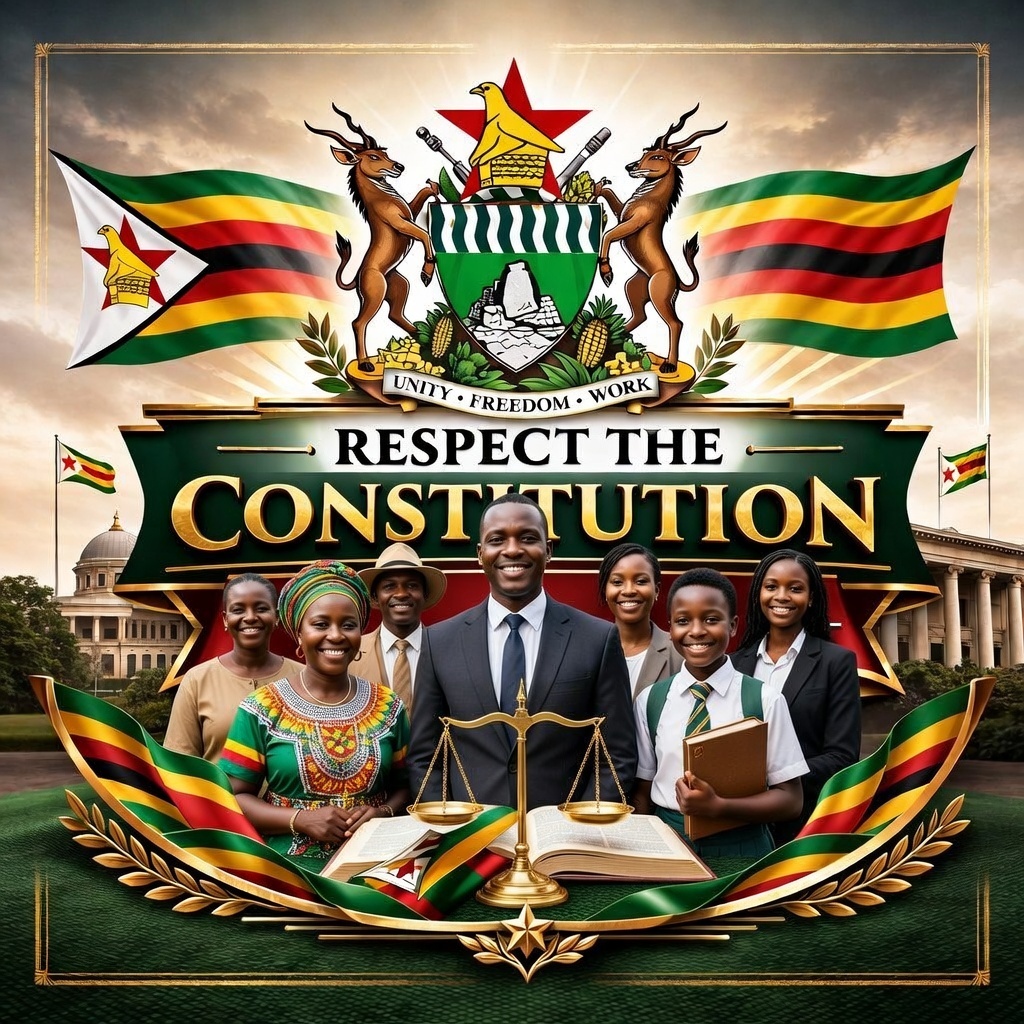
 ZHRO Strongly Condemns ZANU-PF Violence and Sabotage of Constitutional Amendment Bill No. 3 Public Consultations
31 March 2026 –London/Harare
The Zimbabwe Human Rights Organisation (ZHRO) unequivocally condemns the scenes of violence, intimidation, and blatant exclusion that have turned Parliament’s so-called “public consultations” on the Constitution of Zimbabwe Amendment (No. 3) Bill 2026 into a shameful #ZanuPfCharade.
Beatings - intimidation - Zanu PF at Work
- Details
- Written by: Mary Taruvinga - AFP
- Hits: 1207
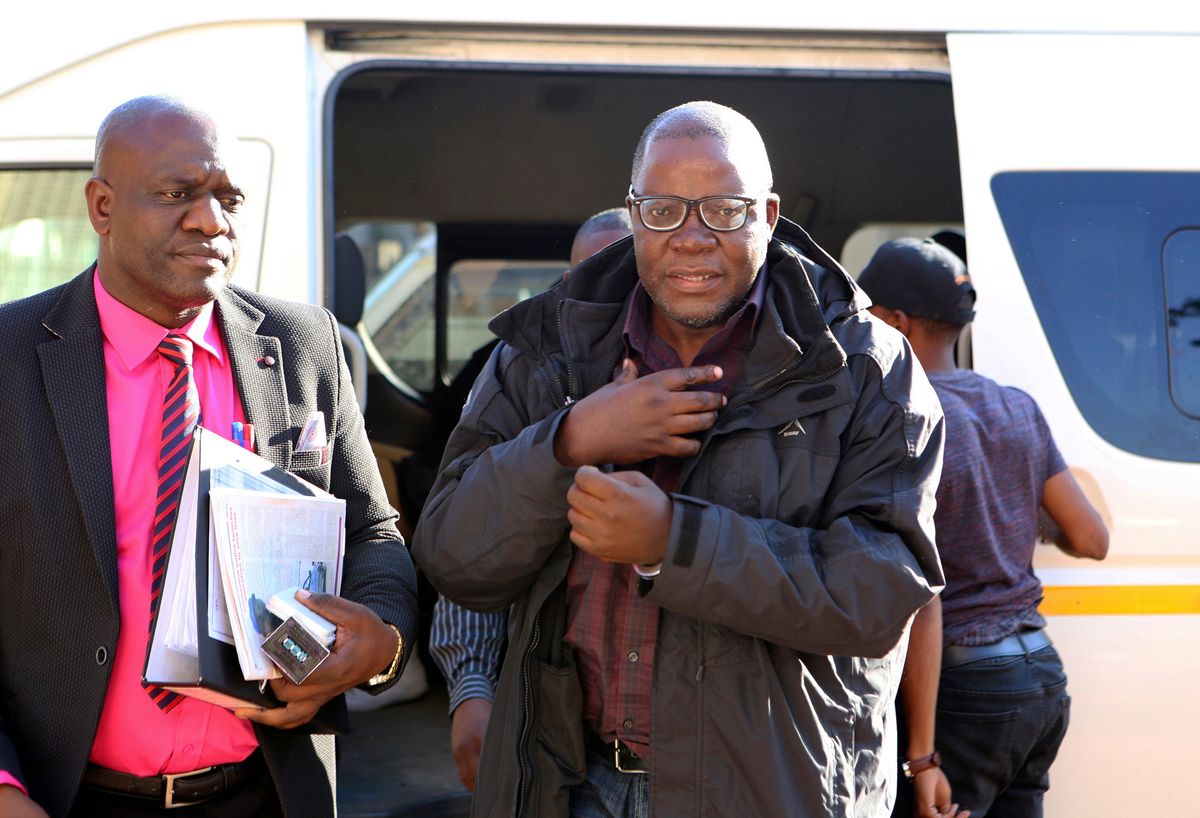
 modernghana.com/news/by Mary Taruvinga
Beatings, intimidation as Zimbabwe (regime) bids to extend presidential term
HARARE — Professor Lovemore Madhuku struggled to focus without his spectacles, broken in an assault that shocked many in Zimbabwe when footage of his injuries was shared on social media. His lips were still swollen, and bruises lined his back, the aftermath of an assault he blamed on police-backed security agents who stormed a meeting of his opposition party in early March. The attack is among a series reported by groups mobilising against a proposed constitutional amendment passed by cabinet last month that would extend President Emmerson Mnangagwa's term.
Page 1 of 52


