
There is very little evidence of an operational Democracy in Zimbabwe, in practice. This situation has been continuing since the "first independence" registered on 18th April 1980
- Details
- Written by: Geoffrey Feltoe
- Hits: 231
 The political capture of traditional leaders in Zimbabwe
Chiefs and other traditional leaders are unelected, hereditary figures who serve as the primary local governance structure in rural areas, acting as custodians of cultural values, customs, and communal land while also performing administrative and judicial functions within their communities. In rural Zimbabwe, chiefs control land allocation and access to communal resources and resolve disputes.
Section 281(2) of the 2013 Constitution emphatically provides that traditional leaders must not be members of any political party or in any way participate in partisan politics or act in a partisan manner or further the interests of any political party.
Clause 20 of CAB3 would repeal s 281(2). If this amendment is passed traditional leaders would be allowed to freely engage in political activities. The explanatory memorandum tries to justify this radical change on the basis that stopping traditional leaders from political activity right to take part in political activities violates their political rights. This justification is not sound. If traditional leaders are affiliated to a political party villagers will believe that the will be biased in carrying out their various functions such land allocation, dispute settlement and distribution of government food aid. Villagers who are members of pollical parties not favoured by the traditional leader will fear that they will be discriminated against. The same considerations apply to judges who are required to be politically non-partisan.
There are other compelling reasons why traditional leaders should Zimbabwe to remain politically neutral. Politicisation weakens the cultural and historical role of chiefs, turning them into political operatives rather than custodians of traditional values. Chiefs derive authority from tradition, not elections and their legitimacy depends on their neutrality.
- Details
- Written by: John Burke
- Hits: 1313
 ZHRO | Zimbabwe Human Rights Organisation
zhro.org.uk | Angmering, West Sussex, United Kingdom
OBSERVER REPORT
Constitution Defenders Forum (CDF)
Inaugural UK Town Hall Meeting
Saturday, 6 June 2026 | University of Leicester Campus
|
Report Author |
John C. Burke — Managing Trustee, ZHRO (Zimbabwe Human Rights Organisation) |
|
Event Date |
Saturday, 6 June 2026 |
|
Venue |
University of Leicester Campus, Leicester, United Kingdom |
|
Attendance |
In excess of 100 Zimbabweans drawn from across the United Kingdom |
|
Report Status |
Observer Report — Civil Society Record |
1. OBSERVER'S JOURNEY & CONTEXT
This report is submitted in the personal capacity of John C. Burke, Managing Trustee of the Zimbabwe Human Rights Organisation (ZHRO), who attended the event as an observer on Saturday 6 June 2026 — travelling from the ZHRO headquarters in Angmering, West Sussex, arriving at the University of Leicester campus at approximately 11:00 am.
ZHRO was established as a human rights advocacy organisation representing Zimbabweans in the diaspora, and has maintained a sustained campaign over nearly a decade — including multiple petition deliveries to the offices of successive Prime Ministers at 10 Downing Street — on issues of democratic rights, the right of return, the Diaspora Vote, and constitutional protection. Through long-standing partnerships with Chief Felix Ndiweni and his referendum strategies (z-dc.com) and through alliances with ROHR Zimbabwe and other civil society formations, ZHRO has consistently championed the constitutional rights of all Zimbabweans, wherever they reside.
It is in that spirit — and as one who has attended the Zimbabwe Vigil since 2013 — that this observer attended the inaugural UK Town Hall Meeting of the Constitution Defenders Forum.
- Details
- Written by: John Burke
- Hits: 408
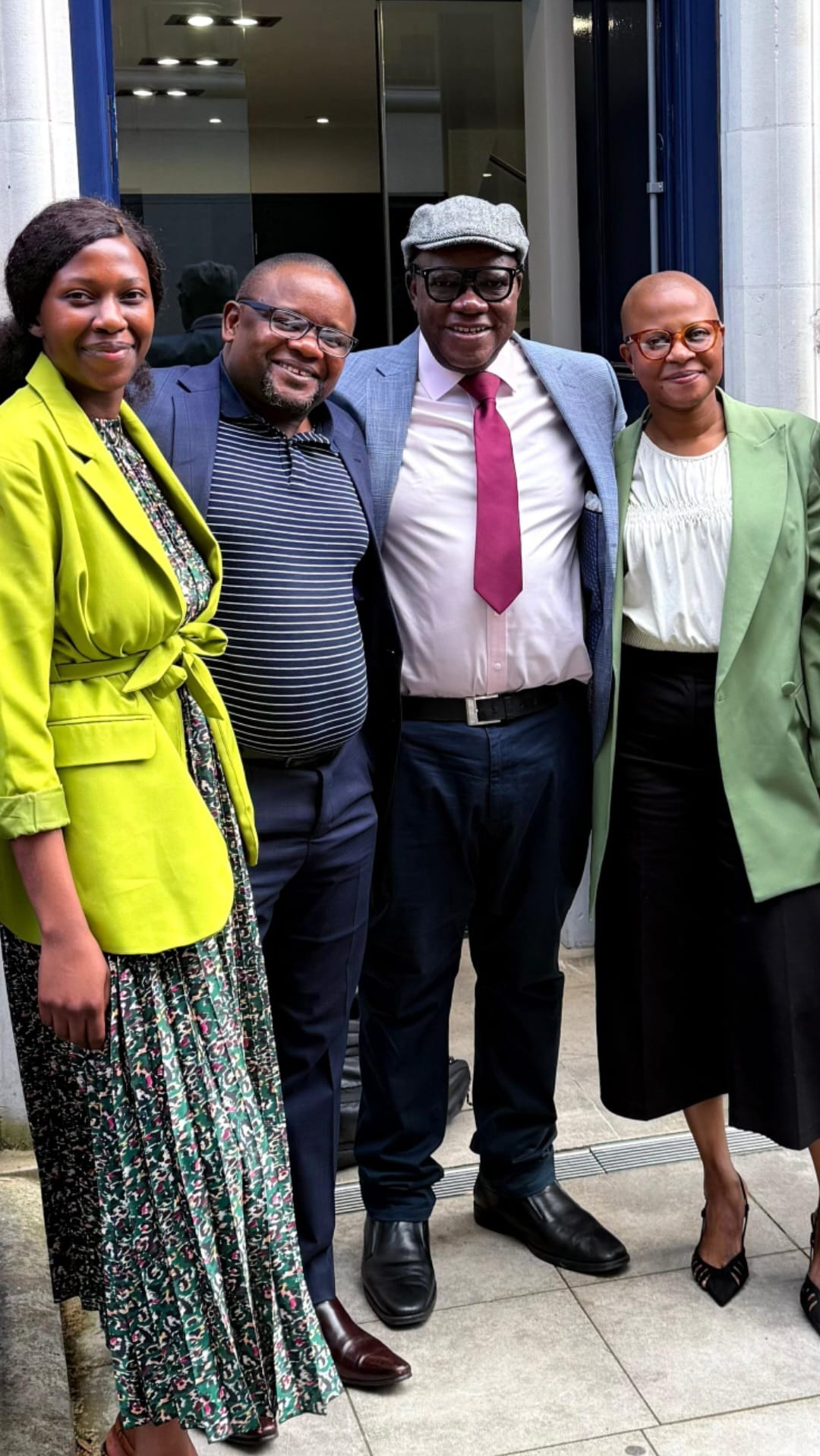 TENDAI BITI IN THE UK AS MNANGAGWA’S CONSTITUTIONAL STEAMROLLER ADVANCES
4–6 June 2026 • Chatham House, London & John Foster Hall, Leicester
EXECUTIVE SUMMARY
On Thursday 4 June 2026, Tendai Biti — former Finance Minister of Zimbabwe, co-founder and Convener of the Constitution Defenders Forum (CDF), and one of the country’s most prominent democratic voices — arrived quietly in the United Kingdom. His arrival was deliberately low-key: ZANU-PF’s operatives and sympathisers, who operate with considerable freedom across the UK and Europe, have a documented history of disrupting opposition engagements and reporting movements back to Harare.
His timing is not accidental. Back in Zimbabwe, President Emmerson Mnangagwa’s ruling party is driving the Constitution of Zimbabwe Amendment (No. 3) Bill — universally known as CAB3 — through Parliament at breakneck pace. Tabled for its First Reading on Tuesday 3 June 2026, CAB3 represents, in the words of its critics, a constitutional coup in slow motion: the systematic dismantling of independent oversight and the concentration of power in the executive. Biti has come to Britain to ensure that the world does not look away.
He spoke at Chatham House on the afternoon of 4 June, and on Saturday 6 June he addresses a major CDF UK Federation Town Hall in Leicester. ZHRO was represented at the Chatham House engagement; this report brings together our member’s account of that meeting alongside the wider political context.
THE CHATHAM HOUSE ENGAGEMENT — 4 JUNE 2026
Chatham House — formally the Royal Institute of International Affairs — is one of the world’s leading think-tanks on international affairs and foreign policy, located at St James’s Square in central London. An invitation to speak there carries substantial weight and speaks to the growing international recognition of Zimbabwe’s constitutional crisis.
The engagement took place under the Chatham House Rule, which permits participants to use the information received but prohibits attribution to any specific speaker or organisation. The specific contents of the discussion and the identity of other participants in the audience are not disclosed here. What follows is the report prepared by ZHRO/CDF member Blessing Tariro Makeyi, reproduced verbatim.
CDF MEETING FEEDBACK — REPORT
Meeting Feedback – Engagement with Convener Tendai Biti – Report by Blessing Tariro Makeyi
Venue: Chatham House, London — 4 June 2026 all photos courtesy of Blessing Tariro Makeyi
|
The Constitution Defenders Forum (CDF) UK Diaspora Chapter attended a meeting convened by Tendai Biti at Chatham House, London. The engagement provided a valuable platform for diaspora voices to interface with a senior figure in Zimbabwe’s opposition and civic landscape. The discussion was substantive, touching on the deteriorating constitutional order in Zimbabwe, the threat posed by CAB3, and the broader erosion of democratic institutions. Biti’s framing of the crisis as one requiring both legal resistance and sustained public mobilisation resonated strongly with CDF’s own position. The meeting reinforced the urgency of coordinated action across diaspora formations and domestic opposition structures. CDF took the opportunity to assert its position clearly — that CAB3 represents an unconstitutional power grab and that the dismantling of oversight bodies including the ZHRC and ZGC cannot go unchallenged. Overall, the engagement was productive and affirmed that the diaspora’s role in applying international pressure remains critical. CDF will continue to seek and build on such engagements as part of its broader advocacy strategy. Report by: Blessing Tariro Makeyi (ZHRO / CDF) Also attending as CDF Members: Edgar Tafadzwa Mafusire, Ruvimbo Makumbe. Plus Founder Mr Tendai Biti |
WHAT IS CAB3 — AND WHY DOES IT MATTER?
The Constitution of Zimbabwe Amendment (No. 3) Bill is the Mnangagwa regime’s most audacious assault on Zimbabwe’s constitutional architecture since the 2013 constitution was adopted. Its stated justifications are administrative efficiency and fiscal discipline. Its real effect is the systematic hollowing out of every independent body that might constrain executive power.
|
CAB3: KEY PROVISIONS UNDER ATTACK
|
Critics — including Biti, CDF, ZHRO, and a growing number of international legal and human rights bodies — argue that CAB3 is not a reform bill but a constitutional coup. It is being pushed through a parliament whose electoral mandate is itself contested. The speed of its passage, deliberately timed to outrun organised opposition, is itself a statement of intent.
WHO IS TENDAI BITI — AND WHY DOES HIS VOICE CARRY WEIGHT?
Tendai Biti is not a comfortable exile issuing statements from a safe distance. He has lived and continues to live the consequences of his opposition. He was arrested and detained by the Mnangagwa regime. He has been physically assaulted. He has faced politically motivated prosecutions. He sought and was granted refuge in Zambia before returning to Zimbabwe to continue his work.
His credentials are formidable. As Finance Minister in the GNU (Government of National Unity) from 2009 to 2013, he rescued Zimbabwe from the abyss of hyperinflation — introducing the multi-currency system that stabilised an economy where a single loaf of bread had cost trillions of Zimbabwean dollars. That record gives him an authority that no amount of regime propaganda can erase.
He is co-founder and Convener of the Constitution Defenders Forum, which now has a significant and growing UK diaspora chapter. His visit to Britain this week — conducted discreetly to avoid interference — demonstrates that the international dimension of Zimbabwe’s democratic struggle is intensifying, not receding.
SATURDAY 6 JUNE 2026 — CDF TOWN HALL, LEICESTER
|
ALL ARE WELCOME
|
The Leicester meeting follows directly from the Chatham House engagement and represents the grassroots dimension of Biti’s UK visit. Where Chatham House provides the platform for high-level international dialogue, John Foster Hall is the community space — the diaspora coming together to hear directly from their political leadership and to coordinate their contribution to the democratic struggle.
THE STEAMROLLER: MNANGAGWA’S ENDGAME
The metaphor of the steamroller is apposite. ZANU-PF does not debate, negotiate or accommodate. It rolls forward, flattening opposition, institutions and law in its path. CAB3 is the latest and most brazen advance. The regime calculates that by the time the international community fully appreciates what has happened, the constitutional damage will be irreversible.
That calculation may be correct — unless the diaspora, civil society, and democratic governments act with urgency. Biti’s visit to the UK this week is an explicit request for that urgency. The message from Chatham House to Leicester is consistent: the window for meaningful resistance is open, but it is closing.
ZHRO POSITION
|
ZHRO unequivocally opposes CAB3 and calls upon the UK Government — as a fellow Commonwealth member and as a state that bears historic responsibility for the conditions under which Zimbabwe’s constitution was crafted — to make clear that the unilateral dismantling of constitutional oversight will have consequences for UK-Zimbabwe relations. We commend Tendai Biti’s courage in visiting the United Kingdom and we commend our member Blessing Tariro Makeyi, alongside Edgar Tafadzwa Mafusire and Ruvimbo Makumbe, for representing both ZHRO and CDF at the Chatham House engagement. |
ZIMBABWE HUMAN RIGHTS ORGANISATION
- Details
- Written by: John Burke
- Hits: 580
 URGENT BRIEFING
DEMOCRACY UNDER SIEGE: TENDAI BITI IN THE UK AS MNANGAGWA’S CONSTITUTIONAL STEAMROLLER APPROACHES
4–6 June 2026 • Harare London & Leicester
EXECUTIVE SUMMARY
On Thursday 4 June 2026, Tendai Biti — former Finance Minister of Zimbabwe, leader of the Constitution Defenders Forum (CDF), survivor of arrest, detention and assault at the hands of the Mnangagwa regime — arrived in the United Kingdom. His visit comes at one of the most critical moments in Zimbabwe’s post-independence history. He is speaking at Chatham House in London today at 4:00 PM and hopes to engage with the Foreign, Commonwealth & Development Office (FCDO). On Saturday 6 June, he addresses a major CDF UK Town Hall Meeting in Leicester.
He arrives in Britain with the clock ticking in Harare. President Emmerson Mnangagwa’s ruling ZANU-PF is driving the Constitution of Zimbabwe Amendment (No. 3) Bill — universally known as CAB3 — through Parliament at breakneck speed. The Bill was tabled for its First Reading on Tuesday 3 June 2026. The regime’s stated parliamentary timetable runs “until the end of June.” This is a constitutional coup in slow motion, and Biti has come to ensure the world does not look away.
THE WEEK IN FOCUS: TWO CRUCIAL EVENTS
|
TODAY — Thursday 4 June 2026 Tendai Biti speaks at Chatham House, London, 4:00 PM. He also seeks engagement with the FCDO to brief UK ministers on the crisis in Zimbabwe. |
SATURDAY — 6 June 2026 CDF UK Federation Town Hall Meeting John Foster Hall, 15 Manor Rd, Oadby, Leicester LE2 2LG 1:00 PM – 5:00 PM (Doors: 12:30 PM) All are welcome. Free to attend. |
- Details
- Written by: Prince Tinashe Chidewu & ZHRO
- Hits: 313
 A United Voice for Justice, Democracy, and a Referendum
Across the world, Zimbabweans continue to rise with one voice demanding fairness, accountability, and respect for their nation's future. The growing call to reject CAB3 is not merely about politics — it is about protecting the constitutional foundations that define Zimbabwe and its people.
But we must be precise about what that constitutional foundation actually demands. The 2013 Constitution of Zimbabwe is unambiguous: changes of this magnitude require a REFERENDUM — not a parliamentary vote, not a public "debate," and certainly not the regime's orchestrated propaganda exercise. CAB3, as currently constituted, is therefore not a legitimate legislative process. It is an illegal ruse.
This distinction matters enormously. The Zanu PF regime has deployed the full resources of the Zimbabwean state — media, money, and machinery — to wage a propaganda and psychological operations campaign. Its goal is to drag Zimbabweans into a debate about the merits of CAB3, as though it were a normal policy discussion. It is not. The moment we accept the framing of debate, we have already conceded the regime's central deception: that this process is lawful. It is not.
There is nothing to debate. There is only one lawful path: a referendum of the Zimbabwean people.
This is not a radical demand — it is the law. The 2013 Constitution exists precisely to prevent any government, including this one, from consolidating power through parliamentary manipulation alone. When Zimbabweans at home and in the diaspora petition against CAB3, they must do so with this clarity at the forefront:
we are not asking the regime to improve CAB3, or to consult more widely, or to slow down. We are demanding that it be recognised for what it is — constitutionally void — and that the referendum the law requires be held.
For many, this moment represents more than a protest. It is a stand for the constitution as the living foundation that guarantees order, balance, and protection for every citizen. When people come together to defend it, they are not only preserving law — they are safeguarding the dignity of generations to come.
Zimbabweans, both at home and in the diaspora, have shown remarkable resilience and unity. From the streets of Harare to gatherings in London, there is a shared determination to ensure that voices are heard and that decisions reflect the genuine will of the people — expressed through the instrument the Constitution prescribes: a referendum. Peaceful demonstrations and petitions are powerful tools. They send a clear message that the people are watching, engaged, and unwilling to be distracted or manipulated.
What makes this movement powerful is its unity and its clarity of purpose. We will not be drawn into the regime's preferred terrain of endless procedural debate. We will not lend legitimacy to an illegal process by treating it as though it merely needs amendment. We stand on one ground: the Constitution, and the referendum it demands.
Different backgrounds, different experiences, yet one common goal — to see a Zimbabwe where leadership is accountable, where laws protect rather than restrict, and where the future is built on transparency, trust, and the expressed will of the people.
As the 15th of May [and the subsequent 18th May demo] approaches, it stands not just as a date, but as a symbol — of courage, of collective action, and of hope. It reminds us that change does not come from silence, and it does not come from being drawn into a rigged debate. It comes from people willing to stand together, clearly and firmly, for what is right and what is lawful.
The message is clear: CAB3 is constitutionally illegitimate. The people of Zimbabwe demand their referendum. And together, that voice cannot be ignored.