 A Nation Silenced:
Zimbabwe’s Cry for Freedom Cannot Be Ignored
When a Voice Is Taken, a Nation Is Heard
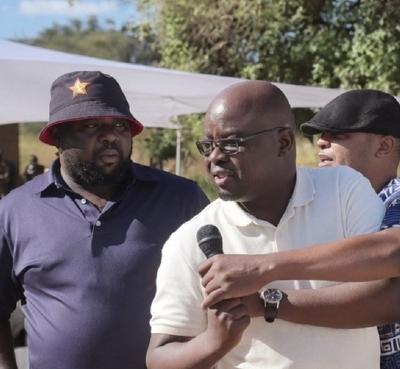
On a day set aside to honour the dignity and contribution of workers, an unsettling incident unfolded in Zimbabwe—one that has come to symbolise a deeper, more troubling reality. At a Workers’ Day event, Leslie Mhangwa, a democratically elected Member of Parliament, was forcibly prevented from addressing the very people he was chosen to represent. As he spoke about the pressing hardships facing ordinary citizens—rising inflation, stagnant wages, and the daily struggle to survive—the microphone was abruptly taken from him. The act, reportedly involving individuals aligned with ZANU-PF, was not merely disruptive. It was symbolic. It was the silencing of a nation.
“If an elected voice can be silenced, what remains for the ordinary citizen?”
Democracy Under Strain
In any democratic society, the right to speak—and to be heard—is not negotiable. It is foundational. Elected representatives are entrusted with the responsibility of carrying the voices of the people into public discourse. To deny them that platform is to erode the very essence of representation. This incident forces a difficult but necessary reflection: if a Member of Parliament can be publicly humiliated and denied the right to speak, what protection exists for the ordinary Zimbabwean? What space remains for truth?
The Weight of Silence
For many citizens, this moment is not isolated. It reflects a broader climate in which dissent is increasingly unwelcome, and where expressing legitimate concerns is met with resistance rather than dialogue. The consequences are not abstract—they are lived daily. They are felt in households where incomes no longer stretch to meet basic needs. They are seen in communities where opportunities continue to diminish. They are carried by young people whose hopes are gradually being replaced by uncertainty. When voices are suppressed, it is not only speech that is lost—it is dignity, agency, and hope.
A Growing Call for Accountability
It is within this context that calls such as “No to 2030” and “No to CAB3” have emerged with increasing clarity and urgency. These are not slogans born of impulse; they are rooted in a deep concern for the future of constitutional governance and democratic integrity in Zimbabwe. They represent a collective insistence that leadership must remain accountable, that power must not outgrow the will of the people, and that the principles of democracy must be preserved—not redefined.
At a Crossroads
Zimbabwe now finds itself at a critical juncture. The direction it chooses will shape not only its political landscape but also the everyday realities of its citizens. Freedom of expression is not a privilege granted at convenience—it is a right that must be protected at all costs. Its erosion, especially in public and symbolic ways, sends a message that cannot be ignored. Yet history offers a quiet reassurance: the voice of the people, once awakened, does not fade easily.
A Final Word
A nation cannot thrive in silence. And the people of Zimbabwe are making it clear—they will not be silent.